POOR SELLING COSTS YOU SERIOUS DOUGH
Neuroselling and sales strategy for restaurants
Your guest is seated, hungry and thirsty.
If your team doesn’t know how to sell, part of the experience
gets lost along the way… and with it,
some of the money you could have earned
THE PROBLEM: YOU HAVEN’T BUILT A SALES SYSTEM YET
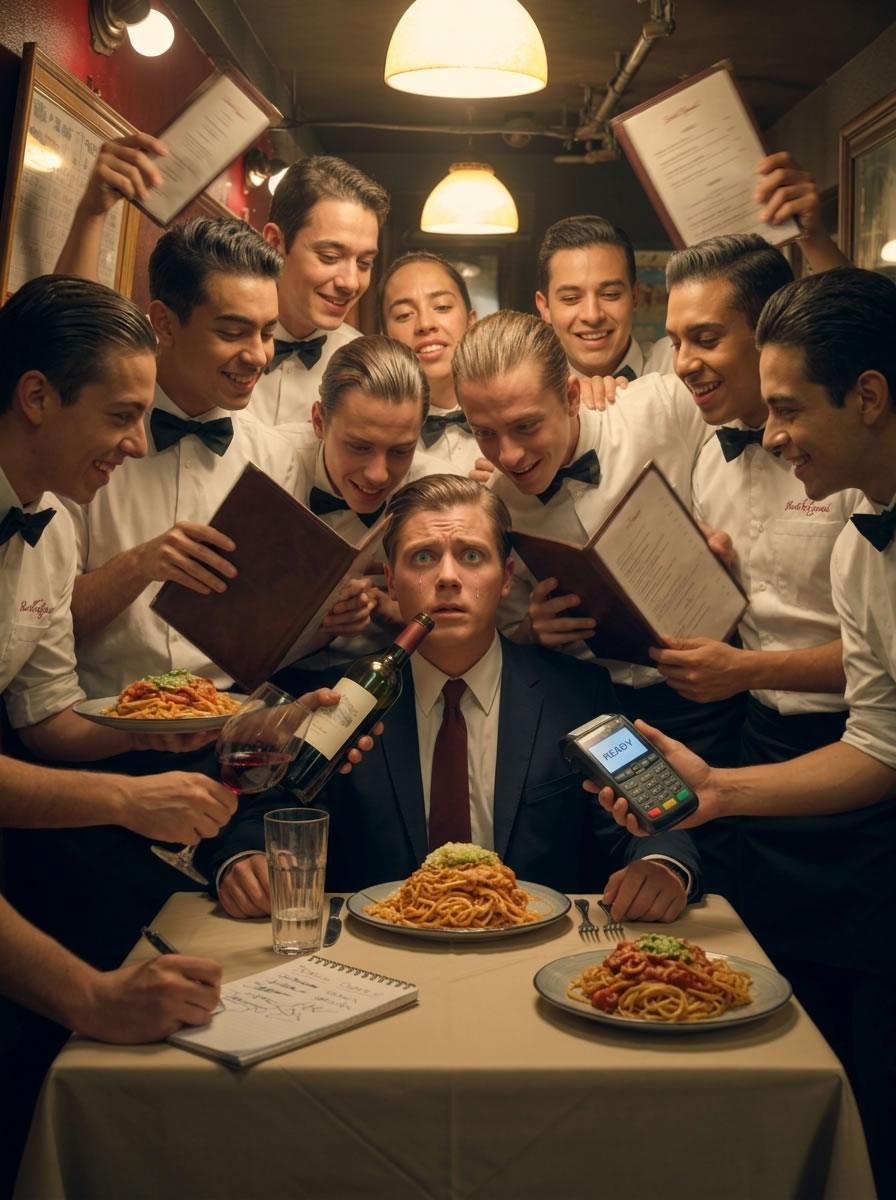
When the whole team wants to sell… but nobody knows how
You can have enthusiasm, great products, initiative and even the best intentions.
But if every waiter does their own thing, makes recommendations without sound judgement, improvises or puts pressure on the guest at the wrong moment, the experience falls apart, and so does the sale.
That’s when two possible problems emerge.
Your team doesn’t know how to sell the good things you already offer
Or you’re not even clear on what you should be selling more of
Why isn’t your team selling as much as it could?
Without a shared sales system, everyone approaches selling in their own way.
One reads the guest and makes a recommendation, another waits for them to decide alone, another makes an offer too soon
and another misses the opportunity altogether.
This creates three clear gaps:
uneven sales performance across the team, missed opportunities and an inconsistent guest experience.
Sometimes the problem lies with the team. Other times it starts earlier: with a menu that lacks a clear sales strategy,
products with poor margins or an offering that doesn’t make clear which items to prioritise.
That’s why we offer two routes:
SELL MORE, when you need to get your team actively selling.
SELL BETTER, when you first need to decide what makes sense to sell and build the system around it.
Let’s find where you’re losing money:
in how your team sells… or in what makes sense to sell.
Neuroselling and sales strategy
for restaurants
Two different routes to improve what happens at the table and what ends up in the till
1. WANT TO SELL MORE?
The money is already
sitting in your restaurant
You may already be clear on who you are as a restaurateur, what you want to offer and the kind of guest you want to attract.
The problem starts when service begins and sales depend too much on who’s looking after the table. One reads the guest and makes a recommendation; another waits. One spots opportunities while another just takes the order.
SELL MORE is a neuroselling and sales training programme for restaurants designed to teach your team to sell more effectively during service, with a shared approach they can apply to real front-of-house situations.
We work on reading guests better, asking questions that make choosing easier, making natural recommendations and spotting cross-selling opportunities to increase average spend per guest without turning the experience into a hard sell.
What will you achieve?
Higher average spend per guest
More cross-selling
More confidence in making recommendations
Greater consistency across staff and shifts
And one idea above all:
What will we work on with your team?
In SELL MORE, we work on the sales skills that come into play during service: reading guests better, asking useful questions, making informed recommendations, explaining the value of dishes and drinks and spotting opportunities for add-on sales.
Your team learns to recognise cues, needs and decision points so they can tailor recommendations to each table. This makes it easier to suggest aperitifs, wines, another round, desserts or extras in a way that feels natural and fits the guest experience.
We also work on handling objections, making a persuasive case, building guest loyalty and cross-selling, using real situations from your restaurant and practical guidance for everyday front-of-house service.
The aim is to turn individual skills into a shared sales system for the whole team, narrowing the gaps between waiting staff and creating a more consistent, professional approach to selling that improves average spend per guest and the guest experience.
2. OR DO YOU WANT TO SELL BETTER?
Every guest is giving you clues.
The question is whether you can read them
You can have an appealing menu, great products and a team keen to sell. But if you don’t know which dishes to prioritise, for which guests and with what financial goal, selling still relies too heavily on instinct.
Because not every sale contributes equally. Some products deliver higher margins, others make operations easier, others best reflect what you stand for, and some may sell well but contribute less than you think.
SELL BETTER is a consultancy and sales strategy process for restaurants in which we analyse your menu, products, costs, margins, operations and guest behaviour to decide what makes sense to sell more of, to whom and when.
From this analysis, we build a sales system your team can use during service: questions, recommendations, talking points and sales guidelines that enable them to guide each table towards strategically chosen products and generate more margin, more control and greater profitability.
What will you achieve?
More margin
A better product mix
More control over sales
Greater profitability per table
And one idea above all:
What will we analyse before selling?
In SELL BETTER, we start by understanding what’s really happening in your restaurant before developing any sales strategy.
We analyse your menu, products, costs, margins, operations and guest behaviour to identify which items to prioritise and which contribute less financial or commercial value than they appear to.
We also look at how guests make decisions, which products attract the most interest, where they encounter difficulties when choosing and what opportunities exist to improve your sales mix, average spend per guest and profitability per table.
Using this information, we define which products to sell more of, to which types of guests, at what point during service and with what financial goal. This gives your restaurant a clear sales direction and aligns sales, margin and the guest experience.
The result is a restaurant sales strategy based on data, products and consumer behaviour, providing the foundation for a more consistent and profitable approach to selling.
How do we turn the analysis into a sales system?
Once we know what makes sense to sell, we turn that strategy into a sales system your team can use during everyday service.
We develop questions, recommendations, talking points and sales guidelines so your team can guide each table more effectively, without relying solely on instinct or each waiter’s individual skills.
We work on upselling, cross-selling, recommending strategic products, explaining value and recognising guest decision points. The aim is for every sales suggestion to make sense both for the person at the table and for the profitability of your business.
Your team learns to turn the restaurant’s strategy into real conversations: how to present an option, when to recommend it, how to explain its value and how to spot opportunities without making service feel like an intrusive sales pitch.
We can then track indicators such as average spend per guest, product mix, add-on sales, the performance of strategic products and your team’s approach to selling. This takes the strategy beyond the menu and brings it into what happens at every table and at the till.
When the system is put in place,
practised and followed,
the difference starts to show
in the numbers
Training alone doesn’t shift the bottom line. Change happens when strategy becomes behaviour, your team puts it into practice on the floor and there’s enough follow-up to make adjustments, embed improvements and measure progress.
That’s when decisions, the sales mix,
the value of each table and, ultimately, the numbers start to change.
Sales increases observed during programmes of implementation, training and sales performance monitoring sustained over several months.
Profit improvement observed in some projects after several months of putting changes into practice, implementing the system and monitoring progress.
Better sales judgement
Your team understands which products to recommend, to which guests, at what point during service and with what business goal in mind.
Better decisions
Your team follows a shared sales strategy when making recommendations, with clear guidance on what to suggest instead of relying on individual instinct.
A better sales mix
Products that offer greater value to guests, deliver stronger margins and better reflect your restaurant’s identity account for a larger share of sales.
More business margin
Your sales strategy starts to translate into more profitable sales at each table and for each guest, improving the margin your restaurant earns.
ONE SHARED RESULT
Sistemics2 defines what makes sense to sell and why.
Neuroacademy turns that strategy into how your team
sells to guests.


Business, products
and profitability
We analyse how your restaurant works, both in terms of its food offering and its finances: menu, products, costs, margins, operations, buying behaviour and opportunities to improve profitability.
From this analysis, we define what to prioritise, for which guests, at what moment and with what financial goal, so the sales strategy makes sense within the day-to-day running of your restaurant.
Guests and neuroselling:
Sales behaviour
We analyse how guests make decisions, what builds trust, what holds them back from choosing and which opportunities arise during conversation and service.
From this strategy, we develop questions, recommendations, talking points and sales behaviours for real hospitality situations, creating a shared approach your team can apply naturally at every table.
What does Sistemics2 bring to the process?
Sistemics2 brings a culinary, operational and financial perspective to your restaurant. We analyse your menu, products, costs, margins, operations and opportunities to improve profitability to understand what’s really happening in the business.
From this analysis, we define which products to prioritise, for which guests, at what point during service and with what financial goal.
The aim is to build a sales framework that fits how your restaurant actually works, connecting products, guest experience, operations and profitability so every sales decision has a clear reason behind it.
What does Neuroacademy bring to the process?
Neuroacademy turns sales strategy into practical behaviours your team can use with guests. It works on neuroselling, consumer behaviour, communication and the guest experience in real hospitality situations.
Your team learns to read guests better, ask useful questions, make natural recommendations, explain value and spot upselling and cross-selling opportunities.
The strategy moves beyond the document and becomes conversations, recommendations and sales habits your team can put into practice consistently during service, following a shared approach.
Strategy → Team → Guest → Sale → Profitability
Sistemics2 and Neuroacademy connect what makes sense to sell with how to make it a choice your guests want to make.
SHALL WE GET STARTED?
Briefly tell us how your restaurant runs today, and we’ll explore what SELL MORE or SELL BETTER could do for your business.
Preguntes freqüents sobre neurovenda i estratègia comercial per a restaurants
Resolem els dubtes més habituals sobre formació comercial per a equips de sala, neurovenda aplicada a restauració, venda complementària, tiquet mitjà, estratègia de producte i rendibilitat per taula, així com les diferències entre VENDRE MÉS i VENDRE MILLOR.
1. What’s the difference between SELL MORE and SELL BETTER?
SELL MORE is designed for restaurants that are already clear on their offering, their menu and the type of guest they want to attract, but need their front-of-house team to sell more effectively during service.
The work focuses on neuroselling in restaurants, reading guests, asking questions, making recommendations, explaining value, add-on sales and cross-selling, with the aim of increasing average spend per guest and creating a more consistent approach to selling across staff and shifts.
SELL BETTER includes an initial consultancy and sales strategy phase. We analyse your menu, products, costs, margins, operations and buying behaviour to define what makes sense to sell, to which guests, at what moment and with what financial goal.
That strategy then becomes a sales system your team can use on the floor: questions, recommendations, talking points and behaviours that connect guest experience, sales and profitability per table.
2. What is neuroselling in restaurants?
Neuroselling in restaurants examines how guests make decisions and what influences their choices during service: trust, language, context, perceived value, timing and how a recommendation is presented.
In practice, it enables your front-of-house team to read guests better, ask useful questions, make natural recommendations and explain the value of dishes, drinks or services, avoiding a mechanical or intrusive approach to selling.
The aim is to improve the quality of each interaction and spot opportunities for upselling, cross-selling and add-on sales when they genuinely fit the needs and expectations of the table.
Applied well, neuroselling connects guest experience, sales recommendations and profitability, so selling more can feel like better service and make choosing easier for the guest.
3. Can sales training increase average spend per guest and add-on sales?
Yes, because a significant part of average spend per guest depends on what happens once the guest is seated: how the offering is presented, what questions your team asks, when they make recommendations and which add-on sales opportunities they spot during service.
Sales training focuses on these behaviours: recommending aperitifs, drinks, another round, desserts, extras and higher-value products, making them a natural part of service that fits the guest experience.
The aim is to make sales less dependent on chance or each waiter’s individual initiative and establish shared sales guidelines for the whole team, so they can spot and make the most of more opportunities during every service.
The final impact on sales also depends on your offering, the type of establishment, implementation and follow-up. That’s why we work with real situations from your restaurant and track indicators such as average spend per guest, product mix and add-on sales.
4. Is the sales training tailored to our menu and type of guest?
Yes. The training is tailored to your establishment: restaurant type, menu, products, guest profile, dining occasions and everyday service situations.
We work with examples and opportunities your team will recognise, so the restaurant sales training can be applied on the floor, at reception or at the point of sale without relying on generic formulas.
In SELL MORE, the focus is on making better recommendations from the products and services you already offer. In SELL BETTER, we also analyse your menu, costs, margins, operations and guest behaviour to decide what to prioritise before building the sales system.
The aim is to link questions, talking points, upselling, cross-selling and recommendations to your restaurant’s real products, real guests and real sales goals.
5. Is it suitable for experienced front-of-house teams?
Yes. Front-of-house experience doesn’t necessarily mean having a shared sales approach. Many professionals provide good service, know the products and understand the trade, but each makes recommendations, explains value and spots opportunities differently.
The training turns these individual skills into more deliberate, repeatable and shared sales behaviours: reading guests better, asking useful questions, making informed recommendations, conveying value and spotting opportunities for add-on sales.
This reduces reliance on the waiter who instinctively “sells well” and builds a more consistent approach to selling on the floor, the guest experience and average spend per guest.
For experienced teams, the value often lies in organising what they already do well, identifying habits that limit sales and turning their service knowledge into a more consistent sales system for the whole restaurant.
6. How do you measure the impact on sales and profitability?
We track progress through sales and financial indicators that show what’s actually happening after implementation.
The main KPIs include average spend per guest, product mix, add-on sales and changes in your team’s sales behaviour.
In SELL BETTER, this data allows us to check whether strategic products are accounting for a larger share of sales, margins are improving and sales are starting to align with the restaurant’s financial goals.
Ongoing monitoring allows us to measure, adjust and embed the sales system, reducing decisions based solely on instinct and giving you greater control over what you sell and profitability per table.
7. Can increases in sales or profit be guaranteed?
We don’t guarantee percentage increases. Results depend on your restaurant’s starting point, its offering, the type of guest, team commitment, implementation and follow-up.
Training and consultancy address the factors that can influence sales performance: average spend per guest, add-on sales, product mix, recommendations, team behaviour and profitability per table.
Some programmes have seen substantial sales increases and profit improvements after several months of putting changes into practice, training and follow-up. These figures should be understood as results observed in specific projects, not a promise that applies to every establishment.
The aim is to build a measurable sales system that works in everyday service, so your restaurant can understand what’s changing, correct what isn’t working and embed the behaviours that deliver better results.
8. Do you only work with restaurants?
No. Although much of our work focuses on restaurants and restaurant groups, the methodology can also be applied to other hospitality businesses where guest interaction directly affects sales and the guest experience.
Neuroacademy also works with 4- and 5-star hotels, reception teams, food and beverage operations, guest services and other guest-facing teams where there are opportunities for recommendations, upselling, cross-selling and improving perceived value.
The approach is tailored to the type of establishment, guest profile and real service situations, always following the same principles: understand guests better, make more informed recommendations and turn service into a sales opportunity.
In every case, the aim is to connect guest experience, the team’s sales behaviour and profitability in a way that works in the day-to-day running of the business.